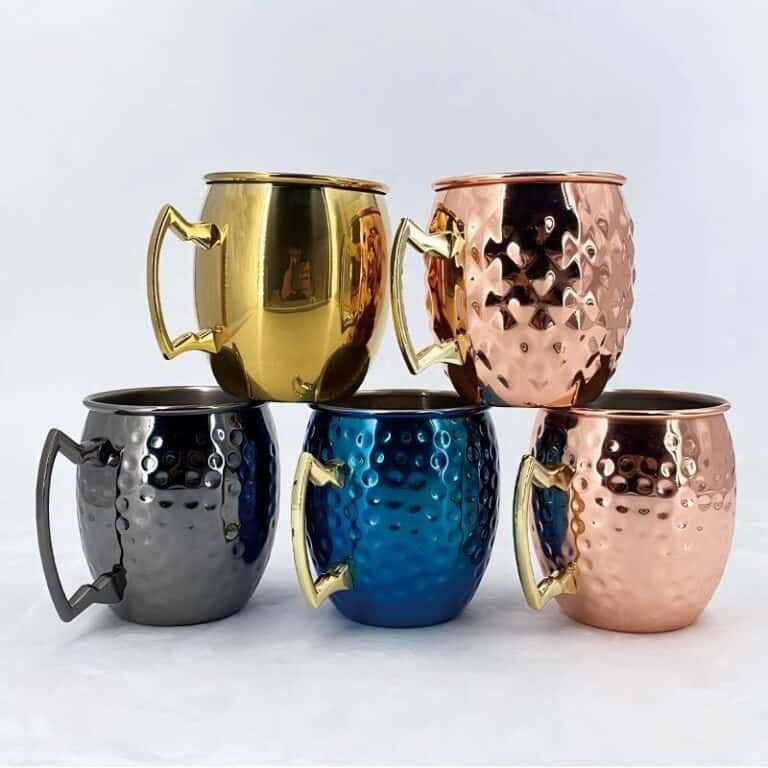
Every year, thousands of bars, hotels, retailers and e-commerce sellers set out to source barware from China — cocktail shakers, jiggers, Moscow mule mugs, strainers, hip flasks and complete bartending sets. Almost all of them make the same first move: they ask for the unit price. And that is exactly where most sourcing projects go wrong, because the factory price tells you almost nothing about what it will really cost to get usable, compliant, on-brand barware onto your shelf or into your warehouse.
This is the playbook we wish every first-time buyer had. After 20 years manufacturing barware in Yongkang, Zhejiang — and shipping OEM/ODM orders to importers in 56+ countries — we have watched every way a sourcing project succeeds or fails. Below we walk through the full process in eight steps, from supplier screening and factory audits to sampling, quality control, Incoterms, freight and import duties, with the exact questions to ask at every stage.

Why Barware Sourcing Goes Wrong (and What It Costs You)
Before we get to the how, it helps to understand the five mistakes that sink most first-time barware imports. In our experience, these are almost never about the product itself — they are about process.
- Chasing the lowest unit price. A 304 stainless steel cocktail shaker has a real material floor. If one quote is 40% below the rest, the “304” is almost certainly 201-grade steel or thinner-walled material that will dent, rust or fail a food-safety test. The savings show up later as returns and chargebacks.
- Buying from a trading company that presents itself as a factory. Traders add margin and slow down problem-solving because they are a middleman between you and the real plant. A true manufacturer answers technical questions directly.
- Ordering without a written specification. “A hammered mule mug” is not a spec. Wall thickness, plating microns, finish, logo method and packaging all need to be written down — otherwise you are buying whatever the factory decides is cheapest.
- Skipping pre-shipment inspection. The cheapest insurance you will ever buy is a third-party or self-arranged inspection before the container is sealed. Catching defects in Yongkang costs pennies; catching them in your warehouse costs dollars.
- Forgetting the landed-cost math. Freight, duties, customs brokerage, port handling and last-mile delivery routinely add 30–70% on top of the factory price. If you price from unit cost alone, the margin you planned never existed.
Step 1 — Lock the Specification Before You Contact Any Supplier
The single highest-leverage thing you can do is write a one-page specification before you send a single inquiry. It forces you to make decisions up front, and it lets suppliers quote you against the same thing instead of against their own assumptions. A solid barware spec answers these questions:
- Material. 304 stainless steel is the food-grade default for shakers, jiggers and strainers. Copper-plated 304 SS is the standard for Moscow mule mugs. 201 steel is cheaper but not food-grade durable — write “304, no substitution” into the spec.
- Wall thickness. 0.6–0.8 mm is fine for retail shakers and mugs; 0.8–1.0 mm for heavy commercial use. Under 0.6 mm feels tinny and dents in commercial dishwashers.
- Capacity & dimensions. State nominal capacity (e.g. 500 ml / 17 oz) and, ideally, the outside diameter and height so two factories quote a physically identical product.
- Finish. Mirror polish, brushed, hammered, matte, or a PVD color (black, gold, gunmetal, rose). PVD is far more durable than paint or plating and is the standard for modern speakeasy brands.
- Logo method. Laser engraving, silk-screen printing, embossing or full-color heat transfer. Each has a different MOQ, cost and durability — see our custom barware manufacturing page for the full comparison.
- Packaging. Individual white box, printed retail box, gift set with insert, or bulk export carton. Packaging can add 10–25% to the unit cost, so decide it up front.
- Target certifications. FDA (US), LFGB (EU), and any retailer-specific standards (e.g. dishwasher-cycle testing, salt-spray for plating). State them in the spec so the supplier includes the testing cost.
Once the spec is locked, every quote becomes directly comparable, and the rest of the process — sampling, QC and the final contract — flows from the same document.

Step 2 — Supplier Screening: The Red Flags and Green Flags
You will typically shortlist suppliers from trade platforms, Google, referrals and the Canton Fair (held twice a year in Guangzhou, including a dedicated kitchenware and household-goods phase). Wherever you find them, screen them against the same checklist before you commit any time.
| RED FLAGS Walk away if… | GREEN FLAGS Good signs |
|---|---|
| Price is 30–40% below the market floor for the spec | Price is within a sensible band and they explain why (material, finish) |
| Cannot or will not do a live video walkthrough of the factory floor | Happy to video-call and show production lines and the QC lab |
| Answers every question with “yes, no problem” and no technical follow-up | Asks technical questions back — plating microns, wall thickness, target market |
| No third-party test reports (FDA/LFGB, salt-spray, material) | Shares SGS/Intertek/TÜV test reports on request |
| Demands 100% payment up front, or insists on Western Union | Standard 30% deposit / 70% against B/L, paid by T/T or L/C |
| Company registered a few months ago; no export history | 10+ years in business with verifiable export references |
Three verification moves that cost little and catch most problems: (1) ask for the business license and check the registration date and registered capital; (2) request a 15-minute live video tour of the plant, specifically asking to see the stamping/polishing lines and any plating or PVD equipment; (3) ask for two or three references in your region and actually contact them. A real factory will have no problem with any of these.
Step 3 — Factory Audit: Confirm It Is Really a Factory
Screening tells you who to trust; an audit tells you whether the factory can actually deliver your order. You do not need to fly to China to audit — you have three practical options at very different price points.
- Third-party audit (recommended for large orders). SGS, Intertek, TÜV and Bureau Veritas all run factory audits for a few hundred dollars. They verify the business license, production capacity, equipment, QC systems and social compliance, and send you a written report.
- Video audit. For smaller first orders, a structured video call works well. Ask to see, in real time: the stamping and polishing lines, the raw-material warehouse (and how 304 vs 201 steel is separated), the plating or PVD line, and the in-house QC area with measuring tools.
- Trade-show visit. Meeting a supplier at the Canton Fair or a Hong Kong sourcing fair is a good middle ground — you see samples in person and can gauge how the team answers questions.
A genuine barware factory will be able to show you most of the following. Use this as a checklist during the audit:
One telling question separates factories from traders: “Can you adjust the wall thickness and the plating microns on this item, and what would it do to the price?” A factory answers with numbers. A trading company stalls.

Step 4 — Sampling: From Stock Sample to Gold Sample
Sampling is where the spec becomes a physical object. There are three distinct sample stages, and conflating them is a common source of later disputes.
- Stock sample (off-the-shelf). A sample of an existing product, sent to confirm general quality, finish and feel. Usually free or low-cost; you pay the courier. Good for a first impression, but it is not what you will actually receive if you customize.
- Pre-production sample (PP sample). A sample made to your exact spec — your dimensions, finish, logo and packaging. This is where mistakes surface: wrong capacity, a logo that is too fine to laser, a PVD color that does not match your brand. Expect to pay a sample fee (typically USD 100–300 for custom finishes) and a few weeks of lead time.
- Gold sample. The approved pre-production sample, signed off by both sides and kept by both sides. This is the physical contract reference against which mass production and the pre-shipment inspection are judged. Never skip this step on a custom order.
On a custom OEM/ODM program, the sequence is almost always: stock sample → PP sample → gold sample → mass production → pre-shipment inspection. For more detail on how our own OEM process runs, see our OEM & ODM services page.

Step 5 — Quality Control: AQL and the Three Inspection Gates
Quality control for barware happens at three gates, not one. The more you catch upstream, the less you pay downstream.
- Incoming material inspection (IQC). The factory checks the raw stainless steel or copper blank before production — grade, thickness, surface. This is where 201 steel disguised as 304 gets caught. A hand-held XRF analyzer identifies the alloy in seconds.
- Inline inspection (during production). Checks happen on the line — dimensions after stamping/spinning, plating thickness, polish quality. Inline checks catch a drifting process before an entire batch is affected.
- Pre-shipment inspection (PSI / final). A final audit of the finished, packed order, usually by a third party or a trusted agent, against the gold sample and the spec. This is the last chance to stop a bad container.
The standard method for the final inspection is AQL (Acceptable Quality Limit) sampling — you inspect a statistically chosen subset rather than every piece. The right AQL level depends on the risk the defect represents:
| AQL Level | What it tolerates | When to use for barware |
|---|---|---|
| AQL 2.5 | Minor cosmetic defects | Promotional giveaways, low-cost bulk items |
| AQL 1.5 | Moderate; balance of cost and quality | Standard retail barware — shakers, mugs, jiggers |
| AQL 0.65 / 0.4 | Very few defects tolerated | Premium, high-ASV gift sets and branded OEM runs |
Beyond visual defects, barware has a few functional tests worth specifying up front: a leak test for cocktail shakers (fill, seal, shake, invert), a dimensional check of capacity and diameter, a coating-thickness and salt-spray test for plated or PVD finishes, and a dishwasher-cycle test if the item is sold as dishwasher-safe. For a deeper look at how we structure QC, see our quality control page.
Step 6 — Trade Terms: Incoterms Explained for Barware
Incoterms (International Commercial Terms, from the ICC) are three-letter codes that define exactly where the seller’s responsibility ends and yours begins — who pays for freight, insurance and customs, and where the risk of loss transfers. Getting this wrong is the most common cause of surprise costs. The five terms that matter most for barware imports:
| Term | Full name | Risk transfers | Best for |
|---|---|---|---|
| EXW | Ex Works | At the factory gate | Rarely — you handle export clearance, usually not worth it |
| FOB | Free on Board | When goods are on the vessel at origin port | Experienced importers with their own forwarder — the most common barware term |
| CIF | Cost, Insurance, Freight | On board at origin (seller pays freight + minimum insurance) | Buyers who want the supplier to arrange freight, but note insurance is minimal |
| DAP | Delivered at Place | At your named destination, before unloading | First-time importers who want the supplier to manage transport; you still pay import duty |
| DDP | Delivered Duty Paid | At your door, duties included | Simplest for the buyer, but the seller must be able to act as importer of record in your country |
Two practical notes. First, FOB is the workhorse for barware — you control ocean freight and insurance through your own forwarder, which is usually cheaper and gives you visibility. Second, the Incoterm affects your duty calculation: the US values goods on an FOB basis (freight and insurance excluded), while the EU values them on a CIF basis (freight and insurance included). Your customs broker handles this adjustment, but it is why a CIF price can look “higher” for duty purposes in Europe.
Step 7 — Shipping: Sea, Air and Express Freight Compared
Barware is dense and volumetric, which makes ocean freight the default for almost every real order. Air freight and express courier are only economical for samples, urgent re-stocks, or very small, high-value runs.
| Mode | Transit (China → US / EU) | Cost | Best for |
|---|---|---|---|
| Ocean FCL (full container) | 18–25 days US / 28–35 days EU | Lowest per-unit | Bulk orders — a 20-ft or 40-ft container of barware |
| Ocean LCL (shared container) | Same as FCL + consolidation time | Per CBM | Orders too small to fill a container |
| Air freight | 3–7 days | High | Urgent restocks, seasonal peaks |
| Express courier (DHL / FedEx / UPS) | 2–5 days door-to-door | Highest | Samples and prototypes |
A rough planning figure: production lead time for stock barware is typically 30–40 days from deposit to ex-factory, and 45–60 days for custom PVD colors or custom logos. Add ocean transit on top of that, and a realistic total timeline for a first container order is 8–12 weeks door-to-door. Build that into your launch or re-stock calendar.
Step 8 — Import Duties & Landed Cost: How to Calculate What You Actually Pay
This is the section most importers skip and most regret skipping. Import duty on barware is not one number — in the US it is a stack of layers, and the total has been volatile in recent years. Here is the framework to understand it (with the caveat that you must confirm current rates with a licensed customs broker before finalizing any order).
| Layer (US, 2026) | What it is | Typical for barware |
|---|---|---|
| MFN base duty | Standard duty on the product’s HTS code | ~2–3.4% for stainless steel articles (HTS 7323.93) |
| Section 301 (China) | Additional tariff on most China-origin goods | +25% (List 3, covers most kitchen/barware) |
| IEEPA / reciprocal tariff | Layer added in 2025, still in flux via courts and executive action | ~+10% (subject to change) |
| Section 232 (steel/aluminum) | Applies to certain steel/aluminum products | May apply to some items — confirm classification |
In practice, the total effective duty on stainless steel barware from China in 2026 has been in the range of roughly 25–40% of customs value, depending on the exact HTS classification and which layers are in force on your entry date. That range, not the 2–3% MFN rate, is the number you must plug into your landed-cost model.
Your HTS (Harmonized Tariff Schedule) code determines the base rate, so get it right. Common barware codes include:
- 7323.93 — stainless steel table/kitchen articles: cocktail shakers, jiggers, spoons, strainers, muddlers, ice tongs, ice buckets
- 7418.10 — copper household articles: copper or copper-plated mule mugs
- 7013 — glassware: glass cocktail shakers and mixing glasses
- 4419 — wood tableware: wooden muddlers and pestles
- 8215.20 — sets of assorted base-metal tableware: boxed bartending sets
The full landed-cost formula is:
A worked example, illustrative only: a $10,000 FOB order of stainless steel shakers (HTS 7323.93) with a 3% MFN duty, 25% Section 301, and 10% reciprocal tariff pays roughly $3,800 in duty — about 38% of FOB — before freight, brokerage and delivery are even added. That is why pricing from the factory price alone destroys margins. For EU buyers, the base rates differ by material (stainless steel and copper household articles are usually low single digits; some glassware carries a higher rate) and the EU values goods on CIF, so freight and insurance are included in the dutiable value.
Two more things that changed recently and catch small buyers off guard: the de minimis exemption (the old duty-free threshold for low-value parcels) has been eliminated for China-origin shipments, so even small sample and test orders are now dutiable; and duty rates have been actively changing through court rulings and executive action. Always verify the current rate for your specific HTS code with your broker before you wire a deposit.
Why Yongkang, Zhejiang Is the Barware Capital of the World
You can source barware from many Chinese cities, but there is a structural reason to buy from Yongkang, Zhejiang: roughly 80% of the world’s barware is made there, in a stainless-steel production cluster with 40+ years of history.
- Cluster efficiency. Steel mills, stamping and spinning shops, plating and PVD lines, handle foundries and packaging factories all sit within a 50 km radius. That shortens lead times and cuts logistics cost at every step.
- Tooling amortization. Forming dies and PVD chamber time are expensive up front; a Yongkang factory spreads them across many buyers, keeping per-piece prices competitive.
- Skilled finishing labor. Hammered finishes, lacquer quality and mirror polishing depend on trained hands, and Yongkang has a multi-generational workforce with exactly that skill.
- Export-first mindset. Most Yongkang factories already understand FDA/LFGB documentation, Amazon FBA prep and Western retail packaging standards.
At LARBO we have been manufacturing barware in Yongkang for 20 years, from a 6000 m² factory serving OEM/ODM importers in 56+ countries. For a deeper look at our production capabilities, see our cocktail shaker manufacturing page and our custom barware manufacturing pillar page.
Barware We Manufacture — Every Category, One Factory

Frequently Asked Questions
What is the minimum order quantity (MOQ) for barware from China?
For stock finishes, MOQ typically starts at 500 pieces per SKU. For custom PVD colors, custom logos or custom packaging, MOQ is usually 1000 pieces. Mixed-SKU container loads (several finishes or products in one 20-ft container) are common and lower the effective MOQ per SKU.
How do I verify a barware supplier is a real factory and not a trading company?
Ask for the business license and check the registration date, request a live video walkthrough of the production lines and QC lab, ask for third-party test reports (FDA/LFGB, salt-spray), and contact two or three export references in your region. A real factory answers technical questions — wall thickness, plating microns, material grade — with numbers, not “no problem.”
How long does a barware order take from deposit to delivery?
Production for stock barware is typically 30–40 days; custom PVD colors or custom logos add to 45–60 days. Ocean transit is roughly 18–25 days to North America and 28–35 days to Europe. A realistic total for a first container order is 8–12 weeks door-to-door.
What import duties do I pay on barware imported from China to the US?
US duty is layered: an MFN base rate (roughly 2–3.4% for stainless steel articles under HTS 7323.93), plus a Section 301 surcharge (25% for most barware), plus a reciprocal tariff layer added in 2025. The total effective rate in 2026 has been roughly 25–40% of customs value, and it is changing. Always confirm the current rate for your specific HTS code with a licensed customs broker.
Should I use FOB, CIF or DDP when importing barware?
FOB is the most common for experienced importers who want to control freight through their own forwarder. CIF lets the supplier arrange freight (with minimal insurance). DDP is simplest but only works well when the supplier can act as importer of record in your country. First-time importers often start with DAP or DDP, then move to FOB as volume grows.
What quality checks should I specify for barware?
Specify a leak test for cocktail shakers, a dimensional check of capacity and diameter, a coating-thickness and salt-spray test for plated or PVD finishes, a dishwasher-cycle test if sold as dishwasher-safe, and a final pre-shipment inspection at AQL 1.5 for standard retail or AQL 0.65 for premium branded runs.
Get a Factory-Direct Quote on Your Barware Order
Send us your spec — product, material, finish, MOQ and destination port — and our sourcing team will reply with a factory-direct quote within 24 hours.
Email: sales@cnlarbo.com · WhatsApp: +86-13967910139
20 years of barware manufacturing · 6000 m² factory · 56+ countries · LFGB & FDA certified
Last updated: August 29, 2026 · Filed under: Sourcing & Import Guides · Reading time: ~12 minutes