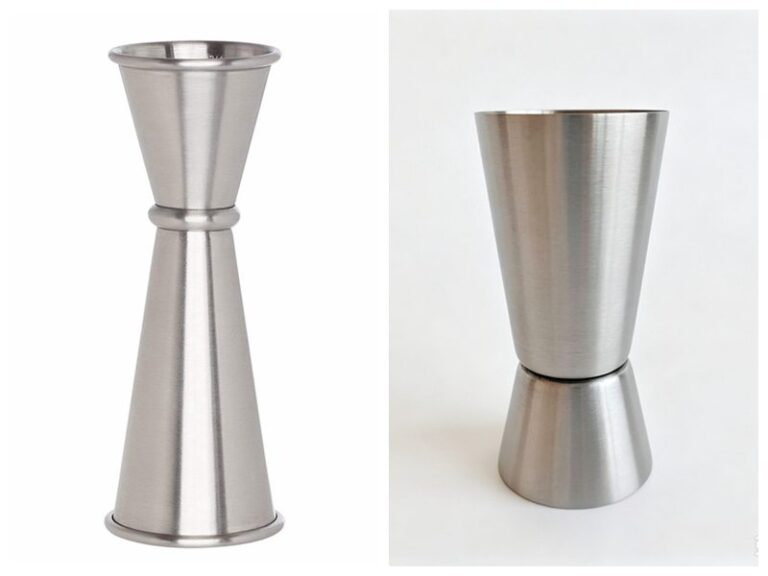
Most stainless steel barware — shakers, jiggers, strainers, ice buckets, muddlers — classifies under HS 7323.93. Base duty is 2% in the US, 3.2% in the EU, 0% in the UK and 5% in Australia, before VAT, GST and country-specific metal measures. Copper mugs sit in 7418.10, aluminium cups in 7615 and drinking glasses in 7013.37.
Those four numbers are the base most-favoured-nation rates, and they are the stable part of the bill. What you actually pay depends on three things the tariff schedule does not put in the same column: the ten-digit line your broker files, the trade measures attached to your country of origin, and the tax regime that applies after duty. This guide separates the three, because that is where landed-cost estimates go wrong.
LARBO has shipped barware from Yongkang to 56 countries since 2007, and we declare the same classification on our export paperwork that our customers declare on their entries. The rates below were checked on 15 October 2026 against the USITC Harmonized Tariff Schedule, the EU TARIC database, the UK Trade Tariff and the Australian Border Force tariff. They are a planning baseline, not a customs ruling: the importing authority makes the final call, and a binding ruling costs far less than a mis-declared container.
Which HS code does barware fall under?
Classification follows the base metal, not the product name, and not the finish. Four consequences matter more than anything else in this article.
- Plating does not change the heading. A copper-plated stainless steel mule mug is a steel article and belongs in 7323.93. Only a solid copper or copper-alloy mug belongs in 7418.10. Get this wrong and you file the wrong rate, the wrong origin claim and the wrong test documentation.
- Steel grade does not move the code. 304 and 316 are both stainless steel, so both sit in 7323.93. Non-stainless steel household ware sits in 7323.99, which in some markets carries a different rate — so the mill certificate and the declaration have to agree.
- Function decides the chapter. A bar spoon is tableware of heading 8215, not a household article of 7323. A wooden muddler is wood tableware of heading 4419, and wood brings biosecurity scrutiny in Australia and ISPM 15 rules for the pallets it ships on.
- Glass splits by value, not by shape. US line 7013.37 is banded by the declared value of each piece, so the same tumbler can attract 5% or 28.5% depending on what you write on the invoice.
| Product family | HS (6-digit) | US HTS | EU CN / TARIC | UK commodity code | Australia |
|---|---|---|---|---|---|
| Stainless bar tools and vessels — shakers, jiggers, strainers, ice buckets, muddlers, hip flasks | 7323.93 | 7323.93.0080 (Other) | 7323 93 00 90 | 7323 93 00 90 | 73239300 |
| Solid copper and copper-alloy mugs, julep cups | 7418.10 | 7418.10.00 | 7418 10 90 90 | 7418 10 90 90 | 74181000 |
| Aluminium cups, shakers, ice buckets | 7615.19 | 7615.19.90 | 7615 19 00 90 | 7615 19 00 90 | 76151900 |
| Drinking glasses, tumblers, mixing glasses | 7013.37 | 7013.37.20 / .50 / .60 by unit value | 7013 37 00 00 | 7013 37 xx 00 | 70133700 |
| Bar spoons, sugar tongs and similar stainless tableware | 8215.99 | 8215.99.35 / .45 | 8215 99 10 00 | 8215 99 10 00 | 82159900 |
| Plastic and silicone accessories — ice moulds, bar mats, pourer caps | 3924.90 | 3924.90.xx | 3924 90 00 90 | 3924 90 00 90 | 39249000 |
What duty rates apply in the US, EU, UK and Australia?
The table below is the base MFN rate for Chinese-origin goods — the rate that applies when no preference is claimed. China has no free trade agreement with the US, the EU or the UK, so MFN is the whole story in those three markets. Australia is the exception: under the China-Australia Free Trade Agreement, a valid certificate of origin takes the same lines to zero.
| Product family | HS | US (MFN) | EU (MFN) | UK (MFN) | Australia (MFN / ChAFTA) |
|---|---|---|---|---|---|
| Stainless bar tools and vessels | 7323.93 | 2% | 3.2% | 0% | 5% / Free with ChAFTA certificate of origin |
| Solid copper mugs | 7418.10 | 3% | 3% | 0% | 5% / Free |
| Aluminium cups and ice buckets | 7615 | 3.1% | 6% | 6% | 5% / Free |
| Drinking glasses | 7013.37 | 5%–28.5% by declared unit value | 11% | 10%–11% | 5% / Free |
| Stainless bar spoons | 8215.99 | Free–6.8% by ten-digit line | 8.5% | 8% | 5% / Free |
| Plastic and silicone accessories | 3924.90 | 3.1%–3.4% | 6.5% | 6%–6.5% | 5% / Free |
Read the UK column carefully, because a zero is not the same as a clean subheading. Within 7323.93 the UK tariff splits into exactly two commodity lines: ironing boards at 3.2% plus a residual anti-dumping duty of 42.3%, and everything else at 0% with no trade remedy recorded. Same subheading, same metal, often the same factory — the difference is that someone once filed a trade case about one of them. Stainless barware itself carried no anti-dumping or countervailing measure in the UK tariff when we checked; the EU requires the same check at ten-digit level in TARIC, because EU measures are company-specific and keyed to the producing mill.
Why is the US bill so much higher than the published rate?
Because the printed tariff rate is only the first layer. US entries stack several legal authorities on the same customs value, and the metal measures are the largest of them. Since 6 April 2026, Section 232 duties on steel derivative articles are assessed on the full customs value of the article rather than on its metal content alone, which moved stainless barware from a small exposure to a large one.
| Layer | Authority | Rate | On USD 12,000 of shakers |
|---|---|---|---|
| Column 1 general (MFN) | HTSUS 7323.93.0080 | 2% | USD 240 |
| Section 232 steel derivative | Chapter 99; full customs value since 6 April 2026 | 25% | USD 3,000 |
| Total ad valorem duty | stacked, not compounded | 27% | USD 3,240 |
| Merchandise processing fee | 0.3464%, with a per-entry floor and ceiling | — | approx. USD 33 |
| Harbor maintenance fee (vessel) | 0.125% | — | USD 15 |
Two things to ask your broker before you price a US programme. First, whether a Section 301 China list rate also attaches to your exact ten-digit line: some steel lines are carved out once Section 232 applies and some are not, and the answer changes the total by double digits. Second, whether your steel is traceable to the mill. Under the Uyghur Forced Labor Prevention Act, CBP treats steel as a high-priority enforcement sector, and a shipment that cannot be traced to its inputs can be detained regardless of the duty you were prepared to pay. We issue a mill certificate with every stainless order for exactly this reason.
How do you calculate landed cost across the four markets?
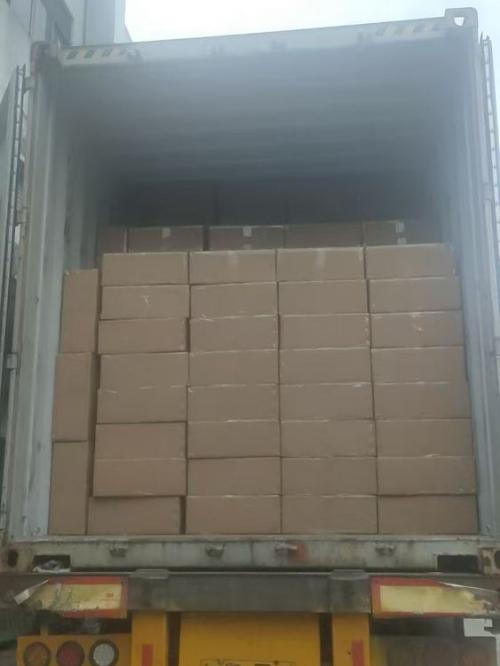
Worked on one real order: 3,000 cobbler shakers in 304 stainless, FOB Ningbo at USD 2.60, freight and insurance of USD 1,100 to Los Angeles, USD 1,350 to Rotterdam and Felixstowe, USD 1,250 to Sydney. Duty is separated from recoverable tax, because for a registered B2B importer VAT and GST are cash flow rather than cost.
| Market | Duty basis | Duty rate | Duty | Recoverable tax | Landed cost ex-tax | Effective duty on FOB |
|---|---|---|---|---|---|---|
| United States | Transaction value, generally FOB | 27% | USD 2,268 | None federally | USD 11,811 | 27.0% |
| EU (Netherlands) | CIF | 3.2% | USD 312 | Import VAT 21% = USD 2,113 | USD 10,062 | 3.7% |
| United Kingdom | CIF | 0% | USD 0 | Import VAT 20% = USD 1,950 | USD 9,750 | 0% |
| Australia (MFN) | FOB | 5% | USD 420 | GST 10% = USD 1,007 | USD 10,070 | 5.0% |
| Australia (ChAFTA) | FOB | 0% | USD 0 | GST 10% = USD 965 | USD 9,650 | 0% |
The pattern in that table is the most useful thing in this article. On identical goods from the same factory, the duty line ranges from nothing to more than a quarter of goods value, and the spread comes entirely from the destination and the paperwork — not from the supplier. Australia adds an import processing charge on sea consignments above the local threshold, and the UK and EU figures exclude any customs clearance and inland delivery costs.
How do tax, duty basis and low-value thresholds differ?
Three mechanics change the answer even when the duty rate is identical: whether duty is assessed on FOB or CIF, what consumption tax applies on top, and whether small consignments get relief. Samples matter here, because a five-piece sample set sent by courier is a different problem from a container.
| Market | Duty assessed on | Consumption tax | Standard rate | Low-value treatment |
|---|---|---|---|---|
| United States | Transaction value, generally FOB | No federal VAT; state sales or use tax on resale | Varies by state | Do not rely on de minimis for China-origin or commercial entries — treat samples as dutiable unless your broker confirms otherwise |
| European Union | CIF | Import VAT | 17%–27% by member state | Duty relief up to EUR 150; VAT is due from the first euro |
| United Kingdom | CIF | Import VAT | 20% | Duty relief up to GBP 135; VAT is accounted for differently below that threshold |
| Australia | FOB | GST | 10% | Duty relief up to AUD 1,000; GST applies at every value |
How are bar sets and gift sets classified?
A retail set — two or more different articles put up together to meet one specific need and packed for direct sale — is normally classified as a single article under General Rule of Interpretation 3(b), by whichever component gives the set its essential character. In practice that means a shaker-led cocktail set goes in 7323.93 even when the box also contains a glass and a wooden stand.
Two exceptions are worth knowing. Where heading 8215 is involved, a set is dutied at the rate of the highest-duty article in it, so a spoon-led set is not automatically cheap. And where you ship components unassembled in one carton for repacking at destination, customs may treat them as separate articles rather than a set. Fix the set composition on the proforma invoice, declare one code, and if the programme is worth more than one container, pay for a binding ruling: a US eRuling, an EU Binding Tariff Information decision or a UK advance tariff ruling. Each is issued by the authority that will later examine your entry.
What documents should your supplier give you?
- Commercial invoice with the declared unit value and material stated. For glassware under 7013.37, the per-piece value is the classification input, not a formality.
- Packing list with net and gross weights and carton count. Several markets require a supplementary unit (number of items) on the declaration.
- Certificate of origin. Not useful for the US, EU or UK on Chinese-origin goods, but decisive in Australia: it is what turns 5% into zero under ChAFTA.
- Mill certificate for the stainless steel. Heat number, grade and thickness traceable to a named mill. In the US this is also your UFLPA evidence.
- Food-contact documentation for your market. Testing is carried out by accredited laboratories — SGS, TÜV, Intertek and Bureau Veritas among them — and we arrange and manage it on your behalf; the laboratory fee is quoted separately. Reports already on file for a matching product family are shared at no charge.
- Declaration consistency. The code, material and grade on the invoice, the packing list and the certificate of origin have to agree. Most classification disputes start as document inconsistencies, not tariff arguments.
Which classification mistakes cost the most money?
| Mistake | What actually happens | What it costs |
|---|---|---|
| Classifying by product name instead of base metal | A copper-plated stainless mug declared as copper lands in 7418.10 instead of 7323.93 | Wrong rate, wrong origin claim, and a penalty risk on every repeat entry |
| Quoting the US from the tariff schedule alone | 2% is budgeted and 27% is assessed | 25 percentage points of margin, discovered after the goods sail |
| Declaring glassware without a defensible unit value | 7013.37 bands run from 5% to 28.5% in the US | Up to 23 percentage points on the same physical product |
| Not claiming ChAFTA into Australia | 5% is paid because no certificate of origin was requested | 5 percentage points, permanently, on every shipment |
| Reading a 0% duty line as a free import | UK stainless barware is 0% duty but 20% import VAT at the border | No duty cost, but real cash-flow until the VAT return is filed |
| Treating every item in a bar set as separate | GRI 3(b) applies; heading 8215 sets take the highest-duty article | Over- or under-declaration, plus a correction cycle |
Frequently Asked Questions
What is the HS code for a cocktail shaker?
A stainless steel cocktail shaker is classified in 7323.93 — table, kitchen or other household articles of stainless steel. In the US the statistical line is usually 7323.93.0080; in the EU 7323 93 00 90; in the UK 7323 93 00 90; in Australia 73239300. The steel grade does not change the code: 304 and 316 are both stainless.
What is the import duty on barware from China?
For stainless barware under 7323.93 the base rate is 2% in the US, 3.2% in the EU, 0% in the UK and 5% in Australia. The US figure is misleading on its own: metal measures currently add 25 percentage points on the full customs value, so budget roughly 27% all-in. Australia drops to zero with a ChAFTA certificate of origin.
Does the UK really charge no duty on stainless steel barware?
Yes. Commodity code 7323 93 00 90 carries a third-country duty of 0%, and no anti-dumping or countervailing measure against Chinese origin was recorded when we checked in October 2026. Import VAT of 20% still applies on the customs value plus freight, and registered importers normally recover it. Confirm the line before each season — trade remedies are added without notice.
Can Australia import barware from China duty-free?
Yes, under the China-Australia Free Trade Agreement, provided the goods qualify as originating and a valid certificate of origin is presented at entry. Without it the general rate is 5%, assessed on the FOB value rather than CIF. Duty is not the whole Australian bill: GST of 10% applies on the value of taxable importation at every consignment value.
Does each item in a bar set need its own HS code?
Normally no. A set put up for retail sale is classified once, under General Rule of Interpretation 3(b), by the component that gives it its essential character — usually the stainless tool, so 7323.93. Where heading 8215 is involved the set takes the rate of its highest-duty article. Unassembled components shipped for repacking may be treated separately.
How often do HS codes change?
The World Customs Organization revises the Harmonized System every five years, and the next edition takes effect on 1 January 2027. On top of that, the EU Combined Nomenclature is republished each January, and the US schedule is revised several times a year. Re-verify every code at the start of each buying season rather than reusing last year’s entry.
Get your product line classified before you quote it
Duty is decided at the border, but it is locked in much earlier, when the material and the set composition are chosen. Send us your product list, materials and destination markets and we will return the classification we declare on our own shipments, the mill certificate and food-contact documentation that support it, and a landed-cost sheet built on your volumes. Read more about how we run custom barware manufacturing, the quality control and food-contact testing behind every order, and see the ranges it applies to — cocktail shakers, mule mugs and jiggers. Common sourcing questions are also answered in our FAQ.
— 正文结束,下方是 FAQ schema,单独加 —
================================================================
FAQPage schema(单独粘贴)
================================================================
后台 → 这篇文章 → 拉到最底部 → 加一个「自定义 HTML」区块 → 粘贴下面代码。
(如果后台提示脚本被剥离,改用 Rank Math 的 Schema 模板,或告诉我我写成插件。)